
What Are The Possible Legal Implications of Dowry in India?

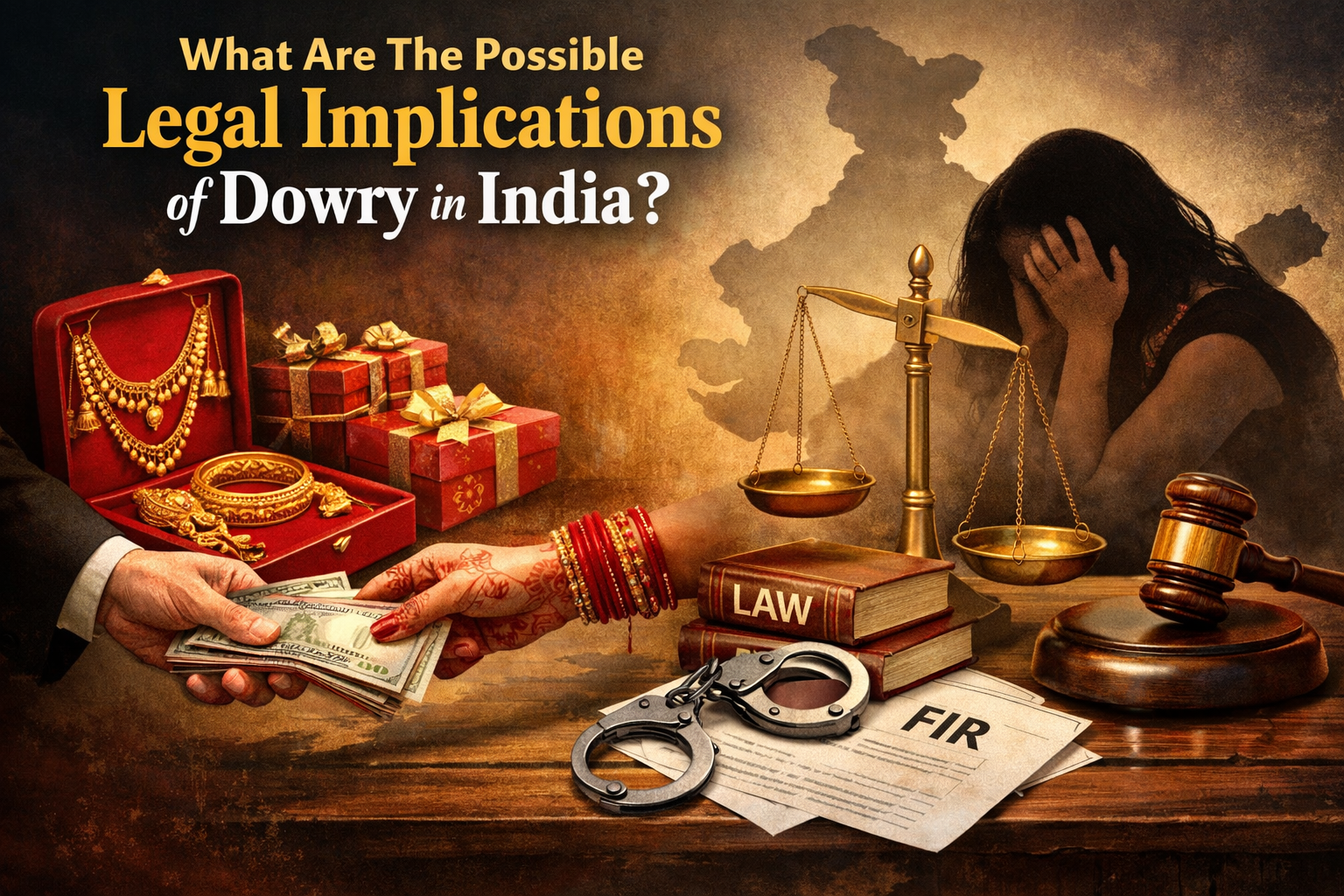
Hey, if you’re wondering about the legal implications of dowry in India, you’re not alone-it’s a tricky part of our cultural and social system in South Asia that often leads to serious crimes and questions. This guide breaks down the key laws, offenses like dowry deaths and cruelty, and what remedies are available under the Dowry Prohibition Act 1961. You’ll get a clear picture of the risks and protections in place for women.
Key Takeaways
- Dowry is illegal under India’sDowry Prohibition Act 1961, banning giving, taking, or demanding dowry, with criminal penalties including imprisonment up to 5 years and fines.
- Section 304B of the Indian Penal Code addresses dowry death s, presuming murder if a woman dies unnaturally within 7 years of marriage due to dowry harassment, shifting burden of proof to accused.
- Section 498A of the Indian Penal Code punishes cruelty by husband or relatives over dowry demands, with up to 3 years imprisonment; civil remedies allow return of dowry and maintenance claims.
Dowry Prohibition Act, 1961
The Dowry Prohibition Act, 1961 explicitly bans the giving, taking, or demanding of dowry in connection with marriage. This law targets the dowry system prevalent in India, where families of the bride often face pressure to provide payments or gifts to the groom’s side. It aims to protect women from harassment and violence linked to such demands.
Under the Act, dowry means any property or valuable security given as consideration for marriage. Punishable acts include directly or indirectly giving, taking, or demanding it by the bride, groom, or their family members. Even aiding in these acts carries legal consequences.
Penalties are strict, with imprisonment up to two years and fines outlined in Section 3. Courts can impose both punishment types based on the offense’s severity. Repeat offenses may lead to harsher measures under related laws like the Indian Penal Code.
Exceptions exist for voluntary gifts to the bride, known as stridhan, which she controls fully. Gifts to the groom require public documentation to avoid dowry classification. Families must ensure such presents stay separate from marriage negotiations.
Reporting Process Under the Act
To report a dowry violation, start by filing a First Information Report at the nearest police station. Provide details of demands, including dates, items requested, and involved parties from the groom’s family. Police must register the complaint under Section 7 of the Act.
- Visit the police station with evidence like messages, witnesses, or receipts.
- If police refuse, approach the Superintendent of Police or a magistrate.
- The magistrate can order an investigation under Section 174 of the Criminal Procedure Code.
- Follow up for FIR copy and track the case progress.
Victims can also file directly with a magistrate if fearing delays. This step-by-step process ensures quick action against dowry harassment and domestic violence. Preserve all communications as proof.
Common Evasion Tactics and Identification
Some families evade the Act by labeling demands as voluntary gifts or wedding expenses. Tactics include indirect pressure through relatives or listing items as the bride’s choice. Watch for patterns where property or cash appears tied to marriage approval.
- Requests phrased as “customary” but enforced aggressively.
- Post-marriage harassment for additional items, disguised as loans.
- Using separate lists for jahez that match dowry demands.
Identify evasion by checking if gifts come with conditions or lists from the groom’s side. Courts scrutinize such claims during trials. Awareness of these helps brides’ families resist and report promptly under the Prohibition Act.
Amendments and Related Provisions
Subsequent amendments strengthened the 1961 Act, while related laws address inheritance and domestic protection. The 1984 and 1986 amendments to the Dowry Prohibition Act increased penalties for dowry-related offenses. These changes made punishments stricter to deter demands and giving of dowry in Indian marriages.
In 1984, amendments under Section 3 and 4 raised fines and introduced imprisonment terms. The 1986 update linked dowry deaths to cruelty provisions in Section 498A of the Indian Penal Code. Families pressuring brides for dowry now face severe legal consequences.
The Protection of Women from Domestic Violence Act 2005 offers civil remedies alongside criminal penalties. Victims of dowry harassment can seek protection orders or residence rights. This complements the 1961 Act by addressing ongoing abuse in the marital home.
The Hindu Succession Act 1956 contrasts by granting women rights to stridhan and inheritance. Unlike dowry, stridhan remains the bride’s property. Courts uphold this to prevent misuse of dowry laws against grooms’ families.
| Provision | Original (1961) | Amended (1984/1986) |
|---|---|---|
| Section 3 (Giving Dowry) | Imprisonment up to 6 months, fine | Imprisonment up to 2 years, fine up to 10,000 rupees |
| Section 4 (Taking Dowry) | Imprisonment up to 6 months, fine | Imprisonment up to 2 years, fine up to 10,000 rupees |
| Dowry Death (IPC 304B) | Not specified | Minimum 7 years imprisonment, up to life |
| Cruelty (IPC 498A) | Not linked | Up to 3 years for harassment over dowry |
Dowry Death (Section 304B IPC)
Section 304B of the Indian Penal Code addresses unnatural deaths of women within seven years of marriage linked to dowry harassment. This provision targets cases where a bride dies from burns, bodily injury, or suspicious circumstances like suicide. It aims to curb cruelty driven by demands for dowry from the groom’s family.
Dowry death occurs if harassment for dowry happens soon before death, meaning within days or weeks prior to the incident. Courts examine the timeline to connect the abuse to the fatality. Common scenarios include suicides or staged accidents amid ongoing demands for cash or property.
Punishable parties include the husband and his relatives of any religion. Punishment is imprisonment for a minimum of seven years, up to life. The law presumes guilt if death fits the criteria within seven years of marriage, shifting the burden to the accused to prove innocence.
Evidentiary requirements feature dying declarations, witness testimonies on harassment, and medical reports. Families file an FIR at the local police station, followed by a magistrate inquiry under CrPC. Common defenses claim natural causes or suicide unrelated to dowry, but strong evidence like prior complaints often overrides them.
Cruelty by Husband or Relatives (Section 498A IPC)
Section 498A targets cruelty by husband or his relatives driven by unlawful dowry demands. This provision in the Indian Penal Code addresses both physical cruelty and mental cruelty inflicted on a woman within marriage. It aims to protect brides from harassment linked to the Dowry system.
The offence is non-bailable and cognizable, meaning police can arrest without a warrant and investigation starts immediately. Victims can file a complaint at any police station using a zero FIR, which transfers the case later if needed. This ensures quick action against domestic violence or abuse.
Supreme Courts can quash false cases under Section 482 CrPC if evidence shows misuse, like family disputes disguised as cruelty. Courts examine if allegations lack merit or stem from personal grudges. This balances protection for genuine victims with safeguards against false claims.
Understanding proof requirements helps distinguish real cruelty from exaggeration. Below is a table outlining common examples of cruelty versus the legal proof needed.
| Type of Cruelty | Example | Legal Proof Needed |
|---|---|---|
| Physical Cruelty | Beating the bride over insufficient dowry | Medical reports, witness statements, injury photos |
| Mental Cruelty | Constant taunts like “Your family gave less gold” | Messages, audio recordings, neighbor testimonies |
| Physical Cruelty | Starving or confining the wife for more money | Photographs of living conditions, doctor notes |
| Mental Cruelty | Threats of suicide or harm to force extra payments | Call logs, emails, family member affidavits |
Historical Context of Dowry in India
The Dowry system in India has deep historical roots tracing back to ancient times, evolving through cultural and social shifts across centuries. In the Vedic period, practices resembled bridewealth, where the groom’s family offered gifts to the bride’s family as a token of respect and alliance in marriage.
Ancient texts from the Puranic period mention stridhan, property given voluntarily to the bride for her personal use, distinct from any demands. Early observers like Megasthenes and Al-Biruni noted customs where brides received gifts, contrasting with later developments.
Over time, this shifted to modern dowry practices, with the bride’s family facing demands from the groom’s side, especially in patrilocal setups common in India. Regional variations emerged, such as jahez in North India, resembling dowry, while stridhan retained its voluntary nature in some areas. The prevalence and causes of the dowry system include economic factors and hypergamy.
This transition fueled social pressures like hypergamy in the Dowry system of India and South Asia, where families gave lavish gifts to secure marriages with higher-status bridegroom s. Understanding this history highlights why laws like the Dowry Prohibition Act later targeted coercive demands on the bride’s family.
Key Legislation Prohibiting Dowry
India enacted landmark laws to curb the dowry system, starting with comprehensive prohibition measures in the early 1960s. The primary statute, the Dowry Prohibition Act of 1961 or Dowry Prohibition Act 1961, bans the giving, taking, or demanding of dowry-unlike mahr in Muslim traditions-in connection with marriage. This law targets the social practice where the bride’s family provides payments or gifts to the groom’s family.
The Act defines dowry broadly as any property or valuable security given as consideration for marriage. It applies to all citizens regardless of religion, covering demands made before, during, or after marriage ceremonies. Courts interpret this to include indirect pressures on the bride’s family for cash, vehicles, or household items.
Amendments in 1984 and 1986 strengthened enforcement by adding stricter penalties and penalty presumptions of guilt for dowry demands. The law interconnects with Section 498A of the Indian Penal Code or Section 498A of the Indian Penal Code, which addresses cruelty by the husband or his relatives. Together, they protect women from harassment, violence, and even death linked to unmet dowry demands.
These provisions emphasize prevention of economic exploitation during marriage. Families should document stridhan, gifts given voluntarily to the bride, to distinguish them from prohibited dowry. Legal awareness helps avoid misuse while upholding the intent to safeguard brides from coercive practices.
Criminal Offenses Under Dowry Laws
Dowry-related harassment often escalates to serious criminal offenses under specific IPC sections. India’s laws target the dowry system that pressures the bride’s family to give excessive gifts or property during marriage. These provisions aim to protect women from demands by the groom or his relatives.
Key sections include Section 304B IPC or Section 304B for dowry death and Section 498A IPC for cruelty. Section 304B applies when a woman dies within seven years of marriage from burns, bodily injury, or unnatural causes, with evidence of cruelty linked to dowry demands. Courts presume the husband’s family caused the death if dowry harassment is proven.
Section 498A covers cruelty by husband or relatives, including harassment for dowry that drives the wife to suicide or endangers her life. Unlike general cruelty, dowry cases carry a presumption against the accused, shifting the burden of proof to them. This makes convictions easier when harassment evidence exists.
The Dowry Prohibition Act, 1961 criminalizes both giving and taking dowry, with penalties up to two years imprisonment. Families facing demands should document evidence like messages or witness statements. Seeking police help early strengthens legal action against abuse.
Dowry Death Under Section 304B
Section 304B addresses dowry death, punishing cases where a bride dies unnaturally soon after marriage due to cruelty over dowry. The offense carries a minimum seven-year sentence, often life imprisonment. It covers suicides or mysterious deaths linked to harassment by the groom’s family.
Courts require proof of cruelty or harassment shortly before death. For example, if a bride faces constant demands for gold or cash, leading to her suicide, the presumption applies. Relatives must explain why no dowry pressure existed.
Practical advice includes preserving suicide notes or medical records as evidence. Families should file FIRs promptly to activate this section. Supreme Court rulings stress thorough investigations to prevent misuse while protecting genuine victims.
Cruelty Under Section 498A
Section 498A targets domestic cruelty by husband or relatives, including mental or physical harassment for dowry. It is non-bailable and cognizable, allowing immediate arrests. Punishment ranges from one to three years with fines.
The law presumes guilt if cruelty evidence like beatings over insufficient dowry emerges. Victims can approach magistrates for protection orders alongside charges. This section often pairs with the Dowry Prohibition Act for comprehensive action.
To build a case, collect proof such as neighbor testimonies or bank transfers forced as dowry. Experts recommend counseling before escalation, but legal recourse is vital for persistent abuse. Courts balance rights to curb false claims while upholding women’s safety.
Presumptions and Burden of Proof
In dowry cases, presumptions against the accused under Section 113B of the Evidence Act simplify prosecution. If cruelty precedes death within seven years, courts assume dowry causation unless rebutted. This protects brides from family violence in patrilocal setups.
The accused must prove innocence, like showing harmonious relations or no demands. For instance, absence of dowry lists or gifts helps defense. Yet, strong victim evidence often leads to convictions.
Awareness of these presumptions aids families consulting lawyers early. Document all interactions to counter potential misuse of laws. This framework deters the cultural practice of dowry in Indian marriages.
Civil Remedies and Legal Recourse
Records of dowry practices date back to visitors like Al-Biruni, Alexander the Great, Arrian, and Megasthenes, and modern studies by scholars like Michael Witzel.
Beyond criminal law, civil remedies offer protection, property recovery, and financial support for dowry victims in India. These options help brides and their families address harassment, recover stridhan, and claim inheritance without relying solely on criminal prosecution. Courts provide accessible paths for justice through specific acts.
The Protection of Women from Domestic Violence Act 2005 allows women to seek immediate relief. Victims can apply for protection orders to stop abuse, secure residence rights in the shared home, and obtain monetary relief for losses from dowry demands. This act covers emotional, physical, and economic violence tied to the dowry system.
Family courts handle stridhan recovery, treating it as the bride’s exclusive property. Under Hindu law, stridhan includes gifts given to the bride before or during marriage. Filing a suit here ensures return of items like jewelry or cash, often with interest for delays.
The Hindu Succession Act 1956 supports inheritance claims for daughters deprived due to dowry-related disputes, as in the high-profile case of Nisha Sharma. Women can challenge unequal property division in the family. These civil routes enable victims to reclaim economic rights post-marriage conflicts.
Applying Under the Domestic Violence Act
Women facing dowry harassment can file under the Protection of Women from Domestic Violence Act 2005 at a magistrate court. The process starts with an application detailing abuse by the groom or his relatives. Courts issue notice within days for quick hearings.
Key reliefs include protection orders barring further violence, residence orders preventing eviction, and monetary relief for medical costs or lost income. For example, a bride harassed for more dowry might get monthly maintenance. Protection officers assist in filing free of cost.
Recovering Stridhan Through Family Courts
To recover stridhan, file a civil suit in the family court in places like Bombay (Mumbai)-once ceded by Charles II of England for his marriage to Catherine of Braganza-where the marriage occurred or the respondent lives. Submit evidence like gift lists or witness statements proving items belonged to the bride. Courts recognize stridhan as her absolute property under Hindu law.
The suit seeks return of items with compensation for misuse. Delays by the groom’s family can lead to penalties. This remedy addresses property disputes common in dowry cases without criminal charges.
Inheritance Claims Under Hindu Succession Act
The Hindu Succession Act 1956 grants daughters equal coparcenary rights in ancestral property. Dowry demands often lead to disinheritance, but women can file suits to claim shares. This applies to Hindus, including those in patrilocal setups post-marriage.
Evidence of family property and exclusion due to dowry disputes strengthens claims. Courts partition assets fairly, protecting women from economic abuse by in-laws. Experts recommend consulting lawyers early to trace inheritance trails.
Step-by-Step Process for Filing a Civil Suit
- Consult a lawyer: Gather documents like marriage proof, dowry lists, and evidence of demands or violence.
- Draft and file plaint: Submit in appropriate civil or family court with court fees based on claim value.
- Court admits and issues notice: Respondent gets 30 days to appear; hearings begin within weeks.
- Evidence and arguments: Present witnesses and documents; cross-examination follows over months.
- Judgment and appeal: Decree issued in 6-18 months typically; appeals go to higher courts if needed.
Timelines vary by court backlog, but interim relief speeds urgent cases. Track progress via court portals for efficiency.
Sample Relief Prayers in Petitions
In dowry-related civil suits, prayers request specific remedies. A typical protection order prayer reads: Pray that the respondents be restrained from committing any act of domestic violence against the petitioner. For stridhan: Pray for recovery of stridhan items worth Rs. X along with 12% interest from the date of demand.
Monetary relief example: Grant compensation of Rs. Y for mental agony and economic loss due to dowry harassment. Residence rights: Direct respondents not to dispossess petitioner from matrimonial home. Inheritance claim: Declare petitioner’s equal share in ancestral property Z under the Hindu Succession Act 1956.
These prayers guide judges toward comprehensive relief, combining protection from the dowry system with property recovery for holistic justice.
Punishments and Penalties
The dowry system, prevalent since the Vedic period and Puranic period, has historical roots noted by travelers like Al-Biruni, Alexander the Great‘s companion Arrian, Megasthenes, and modern scholars like Michael Witzel. Even in Bombay (Mumbai), colonial history linked to Charles II of England and Catherine of Braganza intersects with such traditions.
Stringent punishments under dowry laws deter violations through imprisonment and fines. These penalties target the taking or demanding of dowry in India, protecting brides from harassment and violence. Courts impose them to uphold the Dowry Prohibition Act and related sections of the Indian Penal Code.
Key offenses carry mandatory minimum sentences, making convictions severe. For instance, Section 304B addresses dowry deaths, while Section 498A covers cruelty by the husband or relatives. The table below compares these punishments clearly.
| Offense | Minimum Punishment | Maximum Punishment | Bailable? |
|---|---|---|---|
| Section 304B (Dowry Death) | 7 years imprisonment | Life imprisonment | No |
| Section 498A (Cruelty) | 3 years imprisonment | 3 years imprisonment and fine | No |
| Dowry Prohibition Act (Giving/Taking Dowry) | 6 months imprisonment | 2 years imprisonment and fine up to 10,000 rupees | Yes |
Compounding is possible in some cases under the Dowry Prohibition Act, allowing parties to settle with court permission. However, Section 498A and 304B offenses rarely permit this due to their non-compoundable nature. Families should consult lawyers before pursuing settlements to avoid legal risks.
Minimum mandatory sentences ensure consistent deterrence against dowry demands in marriages. In a practical example, a groom’s family convicted of cruelty under Section 498A faced at least three years in jail, plus fines. This underscores the need for awareness of these legal penalties to prevent abuse.
Procedural Aspects and Burden of Proof
Specific procedures govern dowry case investigations in India, with reversed burdens of proof favoring victims. These steps ensure quick action under the Dowry Prohibition Act and Section 498A of the Indian Penal Code. Families facing dowry harassment allegations must understand this process to navigate legal challenges effectively.
An FIR registration starts the process, and a zero FIR can be filed at any police station, regardless of jurisdiction. Police must complete the initial investigation within 90 days. This timeline pressures authorities to act swiftly on complaints of dowry demands or cruelty.
Before filing a charge-sheet, a magistrate inquiry verifies the claims. Section 113B of the Evidence Act creates a presumption of dowry death if a bride dies unnaturally within seven years of marriage. This shifts the burden of proof to the groom’s family to disprove involvement in dowry-related violence.
- Suicide notes detailing harassment or demands
- Witness statements from relatives or neighbors
- Bank records showing transfers linked to dowry
- Letters or messages evidencing cruelty
- Medical reports of injuries from domestic abuse
Anticipatory bail applications can be filed in high court or sessions court if arrest seems imminent. Courts consider factors like evidence strength and flight risk. Accused relatives often seek this to avoid immediate custody in dowry prohibition cases.
Constitutional Validity and Challenges
While upheld constitutionally, dowry laws face challenges over misuse and procedural fairness. The Supreme Court has noted that Section 498A of the Indian Penal Code, aimed at preventing cruelty against women in marriage, is sometimes used to file false cases for leverage in matrimonial disputes. This raises concerns about balancing protection for brides with fairness for grooms and their families.
In the Arnesh Kumar vs State of Bihar (2014) case, the Supreme Court issued guidelines to curb automatic arrests under Section 498A. Courts must now conduct a preliminary inquiry before registering FIRs in dowry harassment complaints. This step helps prevent hasty actions that could ruin innocent lives.
The Nisha Sharma case highlighted misuse when a bride filed a false dowry demand complaint, leading to the groom’s arrest on his wedding day. It sparked public debate on Section 498A abuse and prompted calls for reforms. Courts have since emphasized evidence-based proceedings to ensure justice.
Reforms suggest mandatory mediation and counseling before invoking dowry prohibition laws. Under inherent powers in Section 482 of the CrPC, High Courts can quash frivolous cases if they lack merit or aim at settling personal scores. Families should seek legal advice early to navigate these procedures effectively.
