
Dowry Good or Bad? Pros, Cons & Legal Facts

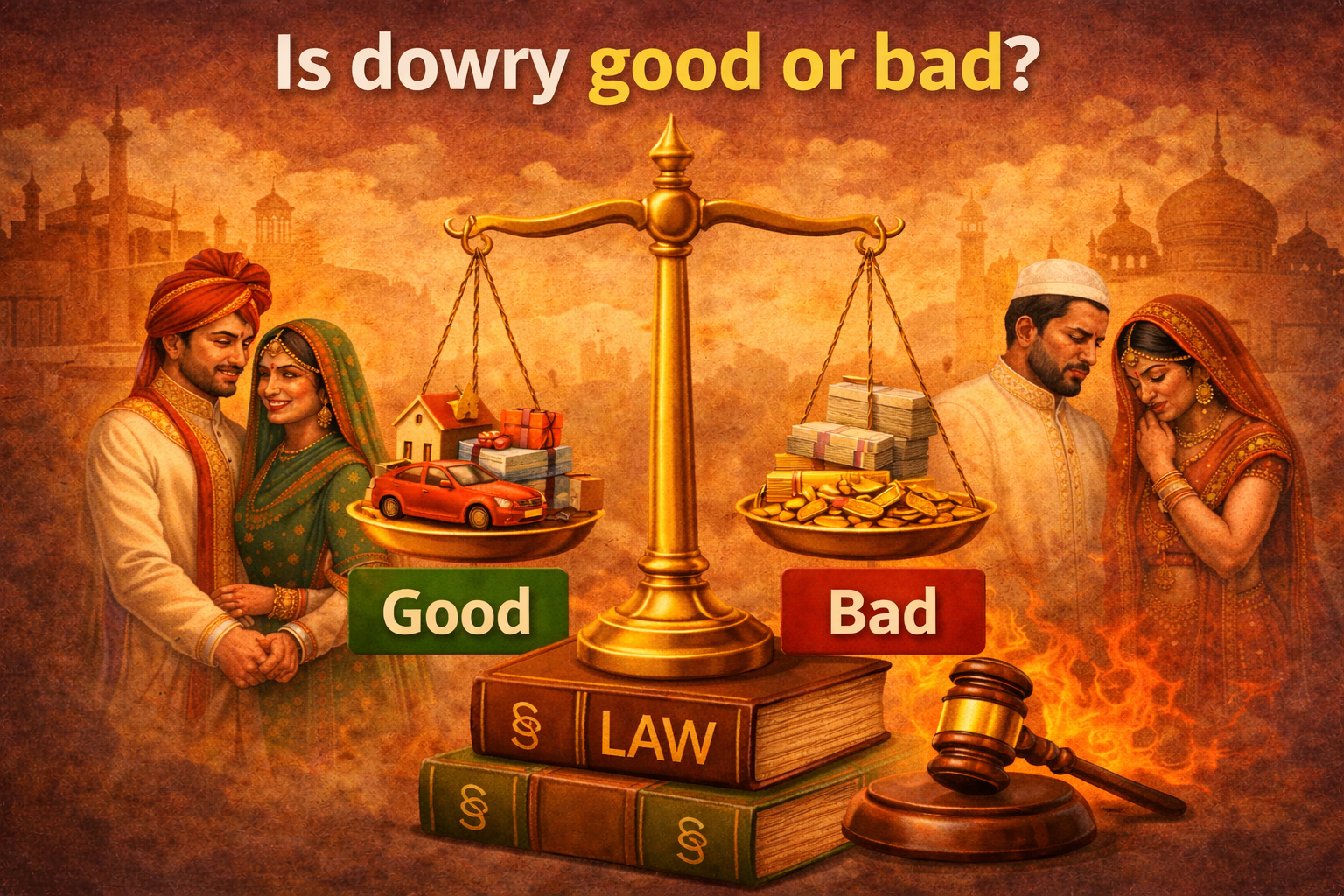
In cultures spanning India to ancient Rome, dowry has sparked fiery debates: a loving gift or a perilous transaction? This deep-rooted custom shapes marriages, families, and fortunes, yet its shadows loom large in modern scandals.
Explore its definition and history, weigh pros like financial security and prestige against cons of exploitation and inequality, and uncover global legal stances. What verdict will you reach?
Definition of Dowry
Dowry refers to the wealth, goods, or money transferred by the bride’s family to the groom or his family during marriage, with global value exceeding $100 billion annually according to World Bank estimates. This dowry system contrasts sharply with bride price, where the groom’s family pays the bride’s kin. The term derives from the Latin dos, meaning a gift to the bride.
In Hindu tradition, Stridhan represents the bride’s personal property, meant for her exclusive use and control. This form emphasizes female give the power toment within cultural norms. It differs from obligatory transfers that burden families.
Common types include cash and gold payments, often expected in urban settings, alongside property or land transfers. These practices fuel dowry demand and sometimes lead to dowry harassment. Regional variations highlight the dowry tradition‘s adaptability across cultures.
- Gold jewelry in India, symbolizing enduring wealth for the bride.
- Livestock in parts of Africa, providing economic security.
- Cash payments in the Middle East, integrated into wedding rituals.
- Household goods in South Asia, enhancing marital harmony.
While positioned as marital gifts, excessive dowry giving creates financial burdens and social pressure. Experts recommend distinguishing voluntary dowry from compulsory dowry to mitigate harms. Understanding these forms aids in debating dowry pros and cons.
Historical Context
Dowry traces back to 2000 BCE in ancient Mesopotamia’s Code of Hammurabi, where it served as a woman’s inheritance share, evolving differently across cultures. In Babylonian law, daughters received about half the inheritance given to sons as proix, ensuring their financial security upon marriage. This practice aimed to protect brides in a patriarchal society.
By 500 BCE in ancient Greece, dowry took the form of proix, property transferred to secure the bride’s position in her new home. Around the 12th century in Europe, the trousseau tradition emerged, with families voluntarily providing household goods and linens as marital gifts. These customs emphasized family support rather than bride price demands.
In colonial India, British rulers codified Hindu dowry customs, transforming voluntary dowry giving into structured expectations. Primary sources reveal this shift: Hammurabi Code 137 states, “If a man have opened his house to his daughter and have given her a bride-price, she shall dwell in her husband’s house.” Manusmriti 9.194 advises, “To a daughter who is unmarried, the father should give as much wealth as he can afford.”
Europe saw dowry evolve from voluntary contributions to gradual phase-out amid women’s rights movements, while India shifted from gifts to dowry demand. Roman Digest 23.3 notes, “Dowry is given to the husband for the wife’s support.” Research by Harvard’s Das Gupta in Dowry and Dowry Deaths (2001) highlights how economic pressures turned cultural dowry into a tool for exploitation in modern contexts.
Arguments in Favor of Dowry
Proponents argue dowry provides economic safeguards and cultural continuity. They highlight its role in ensuring financial stability for the bride amid uncertain marriages. This dowry tradition persists in regions like South Asia and parts of the Middle East.
Key arguments include financial security for the bride, as assets transferred become her personal property. Families also value dowry for enhancing social prestige and strengthening alliances. Examples from India and Bangladesh show how voluntary dowry giving fosters marital harmony.
Globally, similar practices appear in bride price customs in Africa, reframed as groom price support. These defend dowry against blanket bans, emphasizing contextual benefits over harms like dowry harassment. Transitioning to specifics reveals deeper layers of this debated custom.
Critics overlook how regulated dowry negotiation protects against exploitation. In essence, supporters view it as a wealth transfer mechanism promoting family unity and gender-specific safeguards in patriarchal societies.
Financial Security for Bride
Dowry acts as the bride’s financial safety net, providing assets like gold that remain her stridhan under traditional inheritance norms. These dowry gifts offer lasting value in volatile economies. Families prioritize such transfers for long-term protection.
First, it serves as an emergency fund during divorce or widowhood, shielding women from destitution. Second, items like jewelry act as investment capital, appreciating over time through market gains. Research suggests dowry-receiving women face fewer financial crises in rural settings.
- Housing guarantees via property in the bride’s name ensure shelter rights.
- Retirement corpus builds through compounded assets over decades.
- Cash components provide liquidity for education or business ventures.
- Overall, it counters bride exploitation by give the power toing economic independence.
Practical advice centers on documenting dowry property clearly to avoid in-laws disputes. Experts recommend treating dowry as personal inheritance, not family wealth, fostering female give the power toment within arranged marriages.
Family Prestige and Tradition
Generous dowry elevates family social standing, linking it to perceptions of respectable matches in traditional communities. This dowry practice signals commitment and resources. North Indian families often view it as essential for alliance quality.
Prestige mechanisms include securing educated grooms through higher dowry giving, boosting community ranking via lavish weddings. It also improves prospects for siblings’ marriages and preserves cultural rituals. Negotiation power allows families to demand ethical terms.
- Alliance quality ties dowry to groom’s professional status.
- Community ranking reflects wedding scale as status symbol.
- Future prospects enhance sister’s marital options.
- Cultural continuity upholds ancient dowry customs.
- Negotiation balances dowry demand with mutual respect.
Consider families in business hubs who leverage dowry for influential ties, contrasting minimal dowry regions with comparable marriage outcomes. Tradition vs modernity debates highlight how voluntary dowry maintains harmony without excessive burdens.
Arguments Against Dowry
Critics highlight dowry’s role in systemic violence, with India’s NCRB reporting 6,436 dowry deaths in 2022, one every 77 minutes. This dowry death statistic underscores the deadly consequences of the dowry system. Families face immense pressure from dowry demands, leading to harassment and tragedy.
Core arguments against dowry include its promotion of gender inequality, financial ruin for brides’ families, and erosion of marital harmony. The practice turns weddings into transactions, commodifying women as bride price. Experts recommend rejecting dowry to foster genuine family unity.
Dowry harassment often escalates to dowry violence and bride burning, trapping families in debt. Social pressure perpetuates this custom, clashing with modernity. Practical steps involve community awareness and dowry-free marriages.
These harms extend to psychological trauma for victims and legal battles under the Dowry Prohibition Act 1961. The debate favors abolishing dowry for women’s rights and economic stability. Further analysis reveals gender-specific exploitation, as explored below.
Gender Inequality and Exploitation
Dowry institutionalizes female inferiority by commodifying brides, with 91% of harassment complaints under Dowry Prohibition Act 1961 filed by women, per NCRB 2022. This reflects deep patriarchal society roots. Brides become objects in dowry negotiations, facing lifelong discrimination.
Exploitation mechanisms abound in the dowry practice. Families negotiate dowry money based on the bride’s education or skin color, often ranging widely. Post-marriage, in-laws impose further demands, fueling dowry torture and domestic violence.
- Price negotiation treats brides like groom price, prioritizing social status over character.
- Post-marriage demands, common in many cases, lead to ongoing financial burden and emotional trauma.
- Son preference skews family dynamics, worsening gender bias and female give the power toment struggles.
- Debt traps ensnare rural families, borrowing heavily for wedding dowry like jewelry or property.
The Supreme Court case Appi vs State of UP (2021) exemplifies brutality, where a 2 crore dowry demand resulted in bride burning. UN Women reports link dowry to significant global forced marriages. To counter this, promote dowry awareness campaigns and educate on no-dowry norms for marital harmony.
Legal Status Worldwide
Thirty-two countries have anti-dowry laws, yet enforcement varies dramatically across regions. India convicted just 15% of 13,479 cases in 2022 according to NCRB data. These statutes aim to curb dowry harassment and related violence, but outcomes depend on local contexts.
The dowry prohibition efforts reflect a global push against bride exploitation in patriarchal societies. Countries balance cultural dowry traditions with modern women’s rights. Legal frameworks target dowry demand, dowry giving, and dowry deaths, yet challenges persist.
A comparison table highlights key differences in dowry laws worldwide. It covers enactment years, penalties, conviction rates, and unique notes. This overview reveals enforcement gaps in the dowry debate.
| Country | Law Year | Penalty | Enforcement Success | Notes |
|---|---|---|---|---|
| India | 1961 | 7 years jail | 15% conviction | Dowry Prohibition Act targets dowry demand and harassment |
| Pakistan | Zina Ordinance 1979 | Life imprisonment | 8% conviction | Applies to dowry violence under broader hudud laws |
| Bangladesh | 1980 | 5-15 years | 22% conviction | Focuses on dowry-related cruelty and bride burning |
| UK | No specific law | N/A | Varies | Domestic violence laws cover dowry coercion |
| USA | Varies by state | Varies | Low reporting | Extortion or fraud statutes address immigrant dowry cases |
Enforcement Challenges
Cultural resistance undermines dowry bans in many societies. Families view dowry giving as a cultural norm or status symbol, resisting legal interventions. This perpetuates the dowry system despite anti-dowry campaigns.
Evidence issues complicate prosecutions in dowry cases. Victims often lack documentation of dowry demands or harassment, leading to dismissed complaints. Courts require concrete proof amid family disputes.
Family pressure silences dowry victims, prioritizing marital harmony over justice. In-laws exert influence to withdraw cases, fostering dowry torture and suicides. Experts recommend awareness programs to build resilience against such coercion.
Case Study: Arnesh Kumar vs State of Bihar (2014)
The Supreme Court case Arnesh Kumar vs State of Bihar addressed misuse of dowry laws. It issued guidelines to prevent automatic arrests in dowry complaints, reducing false cases significantly. This ruling promotes fair enforcement of the Dowry Act 1961.
Judges mandated preliminary inquiries before detaining accused parties. The decision curbs dowry law abuse in matrimonial disputes, balancing victim protection with due process. It highlights tensions between tradition and modernity in Indian dowry practices.
Post-ruling, fewer frivolous suits emerged, aiding genuine dowry death investigations. Legal experts praise it for fostering gender equality without compromising women’s rights. The case exemplifies dowry reform through judicial oversight.
